
Nitrile Rubber Insulation for Chilled Water, HVAC & Refrigeration Lines
Closed-cell nitrile rubber tubes and sheets, fitted with sealed joints so cold lines stay dry, and finished with aluminium or SS sheet cladding.
Trusted by
 Adani Wilmar
 Gopal Glass Works
 Gobind Glass & Industries
 N K Proteins
 Realcade Lifescience
 Moly Metal
- & many more plants across Gujarat
What is nitrile rubber insulation?
Nitrile rubber insulation is a flexible, black, closed-cell foam, also sold as elastomeric insulation. Each cell is sealed, so the material resists water vapour by itself when the joints are glued properly.
It comes as tubes that slide over pipes, and as sheets or rolls for large pipes, ducts, tanks and valves.
Why cold lines need sealed insulation
A chilled line is colder than the air around it. If humid air touches the pipe, water condenses on it. The pipe drips, rusts under the insulation and loses cooling.
The cure is enough thickness to keep the outer surface above the dew point, and joints glued so that no air can get in. One open joint is enough to start the sweating.
Typical specifications
| Property | Typical range |
|---|---|
| Forms | Tubes for pipes; sheets and rolls for large surfaces |
| Thickness | 9 to 50 mm (commonly 13, 19, 25 and 32 mm) |
| Temperature | About -40 °C to +105 °C |
| Structure | Closed cell, with built-in resistance to water vapour |
| Outdoor finish | Aluminium or SS sheet cladding |
Typical market ranges, for guidance. Check the data sheet of the brand you choose.
How we install it
- Choose the thickness for the line temperature and the local humidity.
- Fit tubes without stretching them, and cut sheets to size for large pipes, bends, valves and flanges.
- Glue every seam and butt joint with adhesive and press it closed.
- Insulate pipe supports and hangers so they do not become cold spots.
- Outdoors and in working areas, cover the insulation with aluminium sheet cladding. In pharmaceutical plants we use SS sheet.
Where it is used
- Chilled water supply and return lines
- Brine and glycol lines
- Refrigerant lines
- AHU, FCU and condensate drain lines
- HVAC ducts
- Chillers, cold tanks and pumps
FAQ
Common questions
Nitrile rubber or PUF: which should I use?
Nitrile rubber is flexible and quick to fit, which suits pipes, ducts and valves. PUF suits larger pipes, very low temperatures, tanks and cold rooms. Many plants use both.
What thickness do chilled water lines need?
It depends on the water temperature, the pipe size and how hot and humid the area is. Chilled water lines commonly use between 13 and 32 mm. We check each line and recommend a thickness that stops condensation.
Does nitrile rubber need cladding?
Indoors it can often be left as it is. Outdoors it needs protection from sunlight and damage, so we cover it with aluminium sheet cladding, or SS sheet cladding in pharmaceutical plants.
Why is my existing insulation dripping?
Usually because of open joints, too little thickness, or insulation that has become wet. Wet insulation does not dry out in place. That section should be replaced and sealed again.
Our work
Insulation projects by Phoenix Insulations
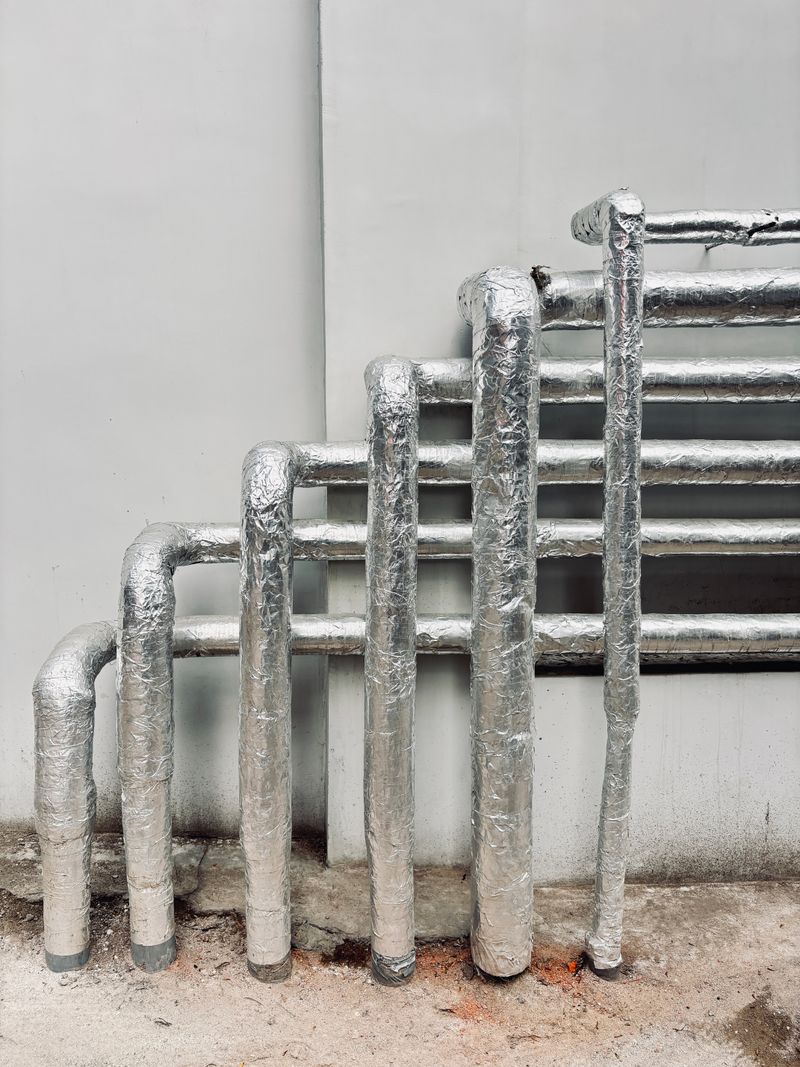
Nitrile rubber insulation Reference photos


Get a quote
Send us your insulation requirement
Share line sizes, lengths, temperatures or a BOQ. Fill in the form and it opens WhatsApp with your details ready to send.
- Mr. Kamlesh Panchal
- +91 98250 46241
- Chat on WhatsApp
- kamleshpanchal246@gmail.com
- 59/797, Prakashdip Appt., Opp. Bhavsar Hostel, Nava Vadaj, Ahmedabad, Gujarat, 380013